Why Does My Hair Smell Bad After I Wash It? 8 Possible Reasons
Washing your hair should leave it feeling clean, fresh, and smelling pleasant. However, sometimes you step out of the shower, dry your hair, and notice an unpleasant odor that wasn’t there before washing. It might smell sour, musty, oily, or even like a wet dog. This can be frustrating, especially when you have just used shampoo and conditioner.
So, why does your hair smell bad after you wash it?
Several things can contribute to this problem, including moisture trapped near the scalp, excess oil, product buildup, bacteria, yeast, and underlying scalp conditions. Sometimes, the smell doesn’t actually come from your hair strands but from the skin underneath them. Dirty brushes, pillowcases, and hair accessories can also transfer unpleasant odors back onto freshly washed hair.
The good news is that most causes can be managed by adjusting your washing and drying routine. Understanding where the smell comes from is the first step toward keeping your hair fresh for longer.
Is the Smell Coming From Your Hair or Your Scalp?
Before changing your shampoo or washing your hair more frequently, try to identify where the odor is coming from.
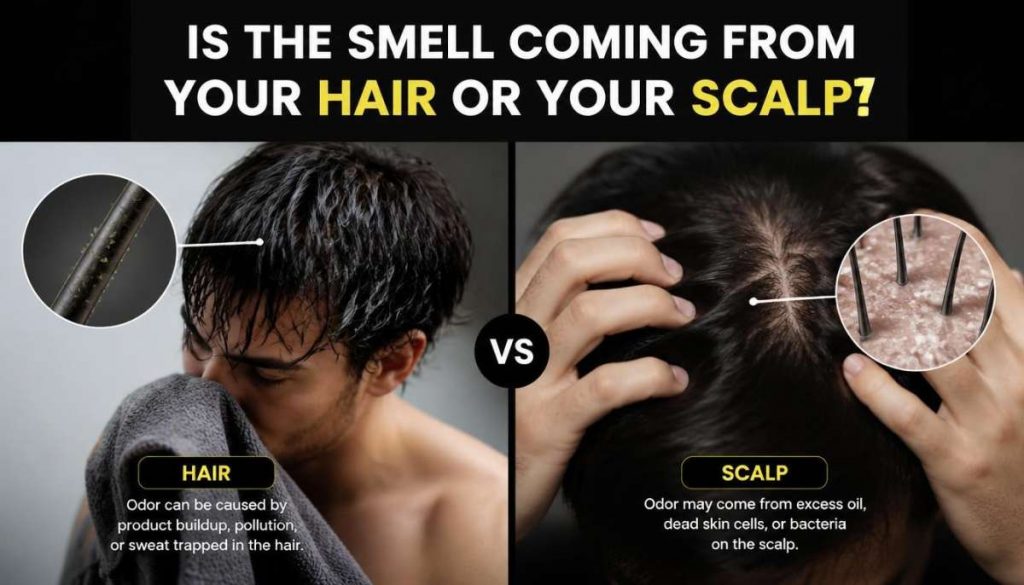
Your scalp and hair strands are different, and each can hold unpleasant smells for different reasons.
A scalp-related odor often develops because of sweat, excess sebum, dead skin cells, or product residue. You may notice the smell near your roots, particularly around the crown, behind your ears, or near your hairline. It may return even after washing because the underlying scalp issue hasn’t been addressed.
Hair strands can also absorb odors from the environment. Smoke, cooking fumes, pollution, and certain styling products can leave lingering smells in your hair even when your scalp is clean.
Try separating your hair into sections and smelling near the roots and the middle or ends. If the odor is strongest near your scalp, focus on scalp care. If it is mainly present throughout your hair, consider product residue, environmental exposure, or heat styling.
This simple distinction can help you choose the right solution instead of repeatedly washing your entire head without addressing the actual cause.
Why Does My Hair Smell Bad After Washing? 8 Common Causes
There isn’t one explanation for every case of unpleasant hair odor. Your washing technique, hair texture, scalp condition, and everyday habits can all play a role.
Here are eight common reasons your hair may smell bad even after washing.
1. Your Hair and Scalp Are Not Drying Completely
One of the first things to check is whether your hair is drying properly after washing.
Thick, long, curly, and tightly coiled hair can take several hours to dry completely. Even when the outer layers feel dry, moisture may remain close to the scalp or underneath dense sections of hair.
Keeping your hair damp for extended periods can create conditions that encourage microbial growth, particularly when combined with sweat and excess oil. This may contribute to a musty or sour smell.
The problem can become more noticeable when you:
- Go to bed with wet hair.
- Tie your hair into a tight bun while it is damp.
- Wear a hat or scarf before your roots are completely dry.
- Keep thick hair covered for long periods.
- Allow moisture to remain trapped underneath protective hairstyles.
How to fix it: Gently squeeze excess water out using a clean microfiber towel. Separate thick sections so air can reach the roots. If necessary, use a blow dryer on a low or medium heat setting, keeping it at a comfortable distance from your scalp.
Make sure your roots and scalp are dry before tying your hair up or going to bed.
If you like this guide than also read our this Guide Why Does My Hair Get Greasy Fast? 9 Common Causes and How to Fix It
2. Oil, Sweat, and Product Residue Are Still on Your Scalp
Your scalp naturally produces sebum, an oily substance that helps protect your skin and hair. However, excess sebum can mix with sweat, dead skin cells, and leftover hair products.
This mixture can contribute to an unpleasant smell, especially when it remains on the scalp between washes.
Sometimes, the problem is not how frequently you wash your hair but how effectively you clean your scalp.
For example, applying shampoo mainly to your hair lengths instead of the roots may leave oil and residue behind. Using too little water or rinsing too quickly can also prevent proper cleansing.
How to fix it: Concentrate shampoo on your scalp rather than scrubbing the entire length of your hair. Use your fingertips to massage the roots gently, paying attention to areas where oil tends to accumulate.
If your hair contains heavy styling products or excess buildup, a clarifying shampoo used occasionally may help. However, avoid overusing it because frequent clarifying can dry or irritate your scalp.
3. Yeast or Bacteria May Be Contributing to Scalp Odor
Your scalp naturally has microorganisms, including bacteria and yeast. Most of them are part of the normal skin environment and do not cause problems.
However, changes in oil production, sweating, and scalp conditions can affect this environment.
Excess oil and accumulated skin cells may contribute to conditions where certain microorganisms become more active. Their interaction with sweat and skin oils can produce unpleasant odors.
You might notice a smell that returns shortly after washing, even when your hair initially feels clean.
Other possible signs include:
- An unusually oily scalp.
- Persistent itching.
- Flaking or scaling.
- Greasy patches around the roots.
- An odor that keeps returning despite regular washing.
A bad smell alone does not prove that you have a bacterial or fungal infection. A healthcare professional needs to assess other symptoms before identifying the cause.
How to fix it: Maintain a consistent scalp-cleaning routine and avoid leaving sweat and styling products on your scalp for extended periods. If the odor continues or comes with itching, inflammation, or unusual scaling, consider seeing a dermatologist.
4. Dandruff or Seborrheic Dermatitis Is Causing Odor
Dandruff is another possible reason your scalp smells unpleasant after washing.
One related condition is seborrheic dermatitis, which can cause greasy or dry flakes, itching, and irritated patches on the scalp.
The condition is associated with an inflammatory response involving Malassezia yeast, which naturally lives on human skin. It commonly affects areas with more oil-producing glands, including the scalp.
When dandruff or seborrheic dermatitis is present, ordinary shampoo may not be enough to control the underlying problem.
You may notice:
- White or yellowish flakes.
- An oily or greasy scalp.
- Persistent itching.
- Scaly patches around the hairline.
- Symptoms that return after washing.
How to fix it: An over-the-counter anti-dandruff shampoo may help manage mild dandruff. Depending on the product, useful active ingredients include ketoconazole, selenium sulfide, zinc pyrithione, and salicylic acid.
Follow the instructions on the bottle because some medicated shampoos need to remain on the scalp for several minutes before rinsing.
If you have persistent symptoms, severe irritation, or no improvement with appropriate treatment, consult a dermatologist.
5. Your Shampoo or Hair Products Are Leaving Residue
Sometimes, the products you use to keep your hair clean and attractive can contribute to the odor.
Conditioners, hair oils, gels, creams, dry shampoos, and styling sprays can accumulate when they are not washed out properly.
This is particularly common when you regularly layer several products or apply heavy oils directly to your scalp.
Another possibility is that a particular product does not suit your scalp. Fragrances and certain ingredients can irritate sensitive skin or cause contact dermatitis in some people.
If you notice itching, redness, burning, or a rash after introducing a new product, stop using it and seek medical advice if symptoms continue.
How to fix it:
- Avoid applying heavy styling products directly to your scalp unless they are designed for that purpose.
- Rinse shampoo and conditioner thoroughly.
- Use a clarifying shampoo occasionally if you have noticeable product buildup.
- Avoid combining too many oils and styling products.
- Stop using products that cause irritation.
Remember that a stronger fragrance does not necessarily mean a better-cleaning shampoo. Choose products based on your scalp and hair needs.
6. Dirty Brushes, Pillowcases, and Hats Are Transferring Odors
You might wash your hair perfectly, but everyday items can transfer unpleasant smells back onto it.
Hairbrushes, combs, hats, scarves, towels, and pillowcases can collect oil, sweat, dead skin cells, dust, and styling product residue.
When these items repeatedly come into contact with freshly washed hair, they can make it smell less fresh.
For example, using the same unwashed brush for several weeks may transfer accumulated oils and residue onto your clean roots.
Similarly, sleeping on a pillowcase that has absorbed sweat and hair products can affect how your hair smells the next morning.
How to fix it: Make these small cleaning habits part of your routine:
- Remove loose hair from brushes and combs regularly.
- Wash brushes according to their material and manufacturer’s instructions.
- Change pillowcases regularly.
- Wash hats, scarves, and headbands as needed.
- Use a clean towel after every hair wash.
- Avoid sharing personal hair tools.
These simple habits can help prevent odors from returning after washing.
7. Hard Water or Environmental Smells Are Lingering in Your Hair
Sometimes, the problem is related to your water supply or surroundings rather than your scalp.
Hard water contains higher levels of dissolved minerals, particularly calcium and magnesium. These minerals can interact with hair products and contribute to residue, leaving hair feeling coated, dull, or difficult to rinse.
Environmental smells can also linger in hair. Smoke, cooking fumes, vehicle pollution, and other airborne particles may attach to hair strands.
This is why your hair might smell unpleasant even after a proper wash, particularly if you spend time around strong odors.
How to fix it: If you suspect hard water, consider testing your water supply. A suitable shower filter or hair-care product designed for mineral buildup may help, although not every shower filter removes water hardness.
For environmental odors, avoid prolonged exposure to smoke and cooking fumes when possible. Rinse your hair when needed and use a gentle shampoo appropriate for your hair type.
8. Heat Styling or Chemical Treatments Are Affecting Your Hair
If your hair smells burnt or unpleasant after washing and styling, consider whether heat tools or chemical treatments are involved.
Flat irons, curling irons, and blow dryers can expose hair to high temperatures. Excessive heat can damage the hair’s outer protective layer, making strands feel rough, dry, or brittle.
Chemical treatments, including bleaching, coloring, and straightening, can also leave noticeable smells depending on the products used.
A burnt smell may be more noticeable when you use a flat iron or curling iron after washing because heat activates or intensifies lingering product odors.
How to fix it: Use heat styling tools at appropriate temperatures and avoid repeatedly passing them over the same section. Apply a suitable heat protectant before styling, and give chemically treated hair the care it needs.
If you notice persistent burnt or chemical odors, scalp irritation, or hair breakage, stop the treatment or styling routine that appears to trigger the problem.
How to Get Rid of Bad Smell in Hair After Washing
Once you understand what might be causing the odor, you can make a few changes to your routine.
You do not necessarily need expensive shampoos or complicated hair treatments. Start with the basics and see whether the smell improves.
1. Clean your scalp properly
Focus on the roots when shampooing. Massage gently with your fingertips to remove sweat, oil, and product residue. Avoid scratching your scalp with your nails.
2. Rinse your hair thoroughly
Leftover shampoo and conditioner can contribute to buildup. Take enough time to rinse your scalp and hair, particularly if your hair is thick or dense.
3. Dry your roots completely
Do not assume your hair is dry just because the outer layers feel dry. Separate thick sections and allow air to reach the scalp. Avoid sleeping with wet hair.
4. Choose products according to your scalp type
An oily scalp may need more frequent cleansing, while dry or curly hair may require a gentler washing schedule. Avoid using heavy oils or styling products if they appear to make the odor worse.
5. Use anti-dandruff shampoo when appropriate
If odor comes with dandruff, itching, or greasy flakes, a suitable medicated shampoo may help. Follow its instructions and seek professional advice if symptoms persist.
6. Keep hair accessories clean
Wash pillowcases, towels, hats, and scarves regularly. Remove accumulated hair and residue from brushes and combs.
7. Avoid masking the smell with perfume
Hair perfumes and strongly scented products may temporarily cover unpleasant odors, but they do not address the underlying cause. Some fragrances can also irritate a sensitive scalp.
If the odor continues despite these changes, a dermatologist can help determine whether a scalp condition or another issue is responsible.
What Different Hair Smells May Mean
The type of odor can sometimes provide clues about what is happening, although smell alone cannot diagnose a scalp problem.
| Type of smell | Possible explanation |
|---|---|
| Musty or damp smell | Hair remaining wet for too long or trapped moisture |
| Sour smell | Sweat, oil, product residue, or microbial activity |
| Wet dog smell | Lingering moisture, absorbed environmental odors, or product buildup |
| Burnt smell | Heat styling, chemical treatments, or lingering product odors |
| Sulfur-like smell | Product or water-related odors, or another issue that may need assessment |
| Oily or unpleasant smell | Excess sebum, sweat, and accumulated scalp residue |
Pay attention to when the odor appears. A smell that develops immediately after washing may have a different explanation from one that returns after 24 or 48 hours.
If the odor is persistent, unusually strong, or accompanied by scalp symptoms, do not rely on its smell to identify the cause.
When Should You See a Dermatologist?
Occasional hair odor is not necessarily a reason to worry. However, a persistent smell that does not improve with proper washing and scalp care deserves attention.
Consider arranging a medical appointment if you experience:
- Persistent unpleasant odor despite changing your hair-care routine.
- Severe or ongoing scalp itching.
- Redness, swelling, or painful areas.
- Thick, greasy, or unusual scaling.
- Sores, crusting, or fluid drainage.
- Patchy hair loss alongside scalp symptoms.
- A suspected fungal infection.
A dermatologist can examine your scalp, review your hair-care products, and determine whether you have dandruff, seborrheic dermatitis, psoriasis, an infection, or another condition.
Depending on the diagnosis, treatment may involve medicated shampoo, topical medication, or another targeted approach.
Getting the correct diagnosis is more useful than repeatedly switching shampoos without knowing what is causing the odor.
Frequently Asked Questions
Why does my hair smell like wet dog after I wash it?
A wet-dog smell can be associated with moisture remaining in thick hair, trapped odors, product buildup, or scalp-related issues. Check whether your roots are completely dry after washing and clean your brushes and towels regularly. If the smell keeps returning, consider a scalp assessment.
Why does my hair smell bad after one day?
Your scalp naturally produces oil and sweat throughout the day. These can mix with dead skin cells and styling products, creating an unpleasant odor. If your hair smells bad within 24 hours of washing, review your cleansing routine and consider whether your scalp is particularly oily.
Why does my hair smell burnt after washing?
A burnt smell may be related to heat styling, damaged hair, or products used during coloring and straightening. Check whether the odor appears after using a flat iron, curling iron, or blow dryer. Reduce excessive heat exposure and avoid applying high heat to damp hair.
Why does my hair smell like sulfur after washing?
A sulfur-like odor may come from water, product residue, environmental exposure, or a scalp-related issue. If the smell persists after changing products and improving your washing routine, consult a dermatologist rather than assuming it is a fungal infection.
Can scalp fungus cause a bad smell?
Certain fungal or yeast-related scalp conditions can contribute to odor. For example, seborrheic dermatitis involves an inflammatory response associated with naturally occurring Malassezia yeast. However, an unpleasant smell alone does not confirm a fungal infection. Other symptoms and a professional examination may be needed.
How can I remove smell from my hair without washing it?
If your hair has picked up smoke, cooking, or environmental odors, try airing it out in a clean, well-ventilated space. Make sure your scalp and roots are dry, and clean any accessories that may be transferring odors. Dry shampoo may temporarily absorb excess oil, but it does not replace regular cleansing or treat an underlying scalp condition.
What shampoo is good for smelly hair?
The best shampoo depends on the reason your hair smells. A gentle regular shampoo may be enough for ordinary oil and product buildup. If you have dandruff or seborrheic dermatitis, products containing ingredients such as ketoconazole, selenium sulfide, or salicylic acid may help. Choose a product based on your symptoms and follow its instructions.
How can I make my hair smell good after washing it?
Start with a clean scalp, rinse shampoo and conditioner thoroughly, and dry your roots completely. Use fresh towels, clean brushes, and regularly washed pillowcases. Avoid applying excessive oils or strongly scented products that may irritate your scalp or contribute to buildup.
Keep Your Hair Fresh by Finding the Real Cause
If your hair smells bad after washing, washing it more frequently is not always the answer. The odor may come from incomplete drying, excess oil, leftover products, dirty hair accessories, environmental exposure, or an underlying scalp condition.
Start by identifying whether the smell comes from your scalp or hair strands. Then adjust your cleansing and drying habits, keep your hair tools clean, and use products that suit your scalp.
Most importantly, do not ignore an odor that keeps returning alongside itching, redness, scaling, or discomfort. A dermatologist can help identify the cause and recommend appropriate treatment.
Healthy hair starts with a healthy scalp, and finding the actual source of the smell is the best way to keep both clean and fresh.