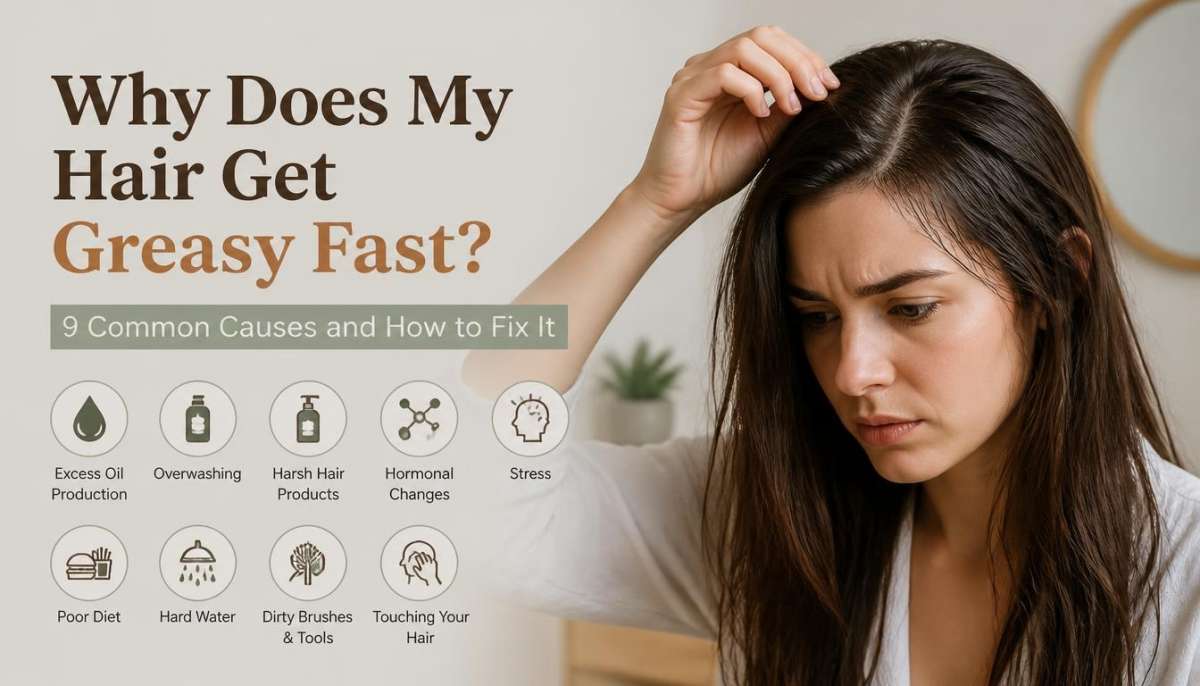
Why Does My Hair Get Greasy Fast? 9 Common Causes and How to Fix It
Does your hair look clean after washing but start feeling greasy again by the next morning? You are not alone. Some people notice oily roots just hours after shampooing, even when they follow a regular hair care routine.
If you keep wondering why does my hair get greasy fast, the answer usually comes down to how much oil your scalp produces, how your hair distributes that oil, and the products or habits affecting your roots.
Your scalp naturally produces sebum, an oil that helps protect your skin and hair. However, when oil builds up quickly, your hair can look flat, feel sticky, or lose its fresh appearance.
The good news is that greasy hair does not always mean you are washing it incorrectly. Understanding your hair type and making a few practical changes can help you manage excess oil without unnecessarily drying out your scalp.
Why Does My Hair Get Greasy Fast?
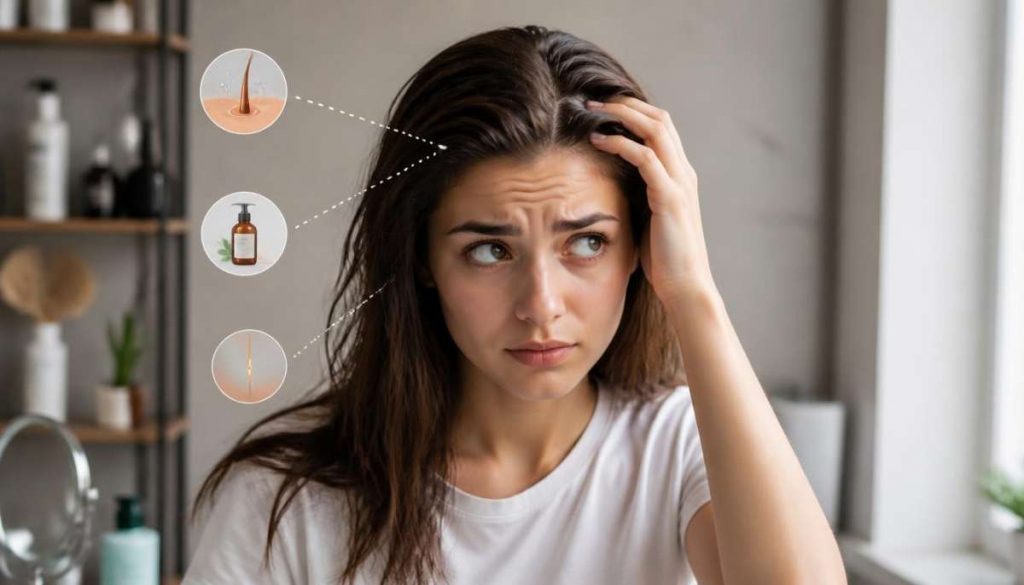
Hair gets greasy when sebum from your scalp accumulates on your hair strands. Some people naturally produce more oil than others, while certain hair textures allow oil to spread more quickly.
Here are some common reasons your hair may become oily shortly after washing.
1. Your Scalp Naturally Produces More Oil
Your scalp contains sebaceous glands that produce sebum. This natural oil helps keep your scalp and hair moisturized.
However, some people have more active oil glands, which means their roots can become greasy faster than someone else’s.
Genetics, age, and hormonal changes can influence how oily your scalp becomes. If your hair has always been greasy shortly after washing, your natural oil production may be a major factor.
You do not necessarily have unhealthy hair. You may simply have an oily scalp that requires a different washing routine.
2. You Have Fine or Straight Hair
Hair texture can make a noticeable difference in how quickly your hair looks oily.
Fine or straight hair often allows sebum to travel along the hair strands more easily. As a result, oil can spread from your scalp toward the lengths, making your hair appear greasy.
Curly and coily hair may distribute oil more slowly because of its shape and texture.
This is one reason two people can follow the same hair care routine but experience completely different results.
If you have fine, straight hair, lightweight products and regular scalp cleansing may work better than heavy conditioners or styling creams.
IF you like our this guide than also read our this article Hair Porosity Test: How to Find Your Hair’s Porosity at Home
3. Your Shampoo Is Not Cleaning Your Scalp Effectively
Sometimes greasy hair is related to how you shampoo rather than how often you wash.
If you apply shampoo mostly to the hair lengths instead of the scalp, oil and residue may remain around the roots.
Styling products, sweat, and natural oil can accumulate over time, especially if you use several products throughout the week.
Try these shampooing habits:
- Wet your scalp and hair thoroughly.
- Apply shampoo primarily to the scalp.
- Massage gently using your fingertips.
- Rinse thoroughly.
- Repeat shampooing only if your scalp or product buildup requires it.
You do not need to scrub aggressively. Gentle cleansing is usually more comfortable and helps avoid unnecessary irritation.
4. Your Conditioner or Styling Products Are Too Heavy
Heavy hair products can make your roots look oily even when your scalp is not producing excessive sebum.
Conditioners, hair oils, leave in treatments, waxes, pomades, and styling creams may leave residue if they are too rich for your hair type or applied near the roots.
If your hair becomes greasy shortly after styling, review the products you use.
Consider:
- Applying conditioner mainly to the mid lengths and ends.
- Keeping heavy oils away from your roots.
- Using lightweight styling products.
- Rinsing conditioner completely.
- Avoiding several layers of styling products.
You do not have to stop using conditioner. Choosing a formula that suits your hair texture and applying it in the right areas can make a difference.
5. Hormonal Changes May Increase Oil Production
Hormones influence the activity of your sebaceous glands.
Changes during puberty, pregnancy, menstrual cycles, and certain medication adjustments can affect how oily your scalp and skin become.
Stress may also influence oiliness for some people, although it is not always the main cause.
If your hair suddenly becomes much greasier than usual, especially alongside changes in your skin or other symptoms, consider discussing it with a healthcare professional.
Do not stop or change prescribed medication without speaking with your clinician.
6. You Touch or Brush Your Hair Frequently
Touching your hair throughout the day can transfer oil and residue from your hands onto your strands.
Frequent brushing can also spread existing scalp oil down the hair shaft. This may make your hair appear greasy sooner, especially if it is fine or straight.
Try to avoid repeatedly running your fingers through your hair.
Also, clean your brushes and combs regularly. Hair tools can collect oil, dust, and styling product residue that may transfer back onto freshly washed hair.
7. Sweat, Humidity, and Your Environment Affect Your Hair
Hot weather, exercise, and humidity can make your hair feel oily or flat.
Sweat itself is not the same as sebum, but sweat, oil, and styling products can combine and make your scalp feel less fresh.
If you exercise frequently or live in a humid climate, you may need to wash your hair more often than someone with a dry climate or less active routine.
After exercise, rinse or shampoo your scalp when needed. Choose a washing routine that keeps your scalp comfortable without making your hair dry or brittle.
8. You May Have Product Buildup
Some styling products leave residue that accumulates over time.
This can happen with dry shampoo, hair sprays, gels, waxes, oils, and leave in conditioners.
Product buildup may make your hair feel heavy, dull, sticky, or greasy even after washing.
A clarifying shampoo may help occasionally if buildup is the problem. However, using it too frequently can dry or irritate your scalp and hair.
Follow the product instructions and choose a formula appropriate for your hair type.
9. Your Greasy Scalp May Be Related to Dandruff
Greasy hair accompanied by itching, redness, or yellowish flakes may sometimes be associated with seborrheic dermatitis.
This is a common scalp condition that can cause oily scaling and irritation. It is not simply a sign of poor hygiene.
If you notice persistent itching, redness, or greasy flakes, an appropriate dandruff shampoo may help. Some products contain ingredients such as ketoconazole, selenium sulfide, or zinc pyrithione, depending on availability and local regulations.
Follow the label directions. If symptoms persist, worsen, or cause significant discomfort, consult a dermatologist.
How to Stop Your Hair From Getting Greasy So Fast
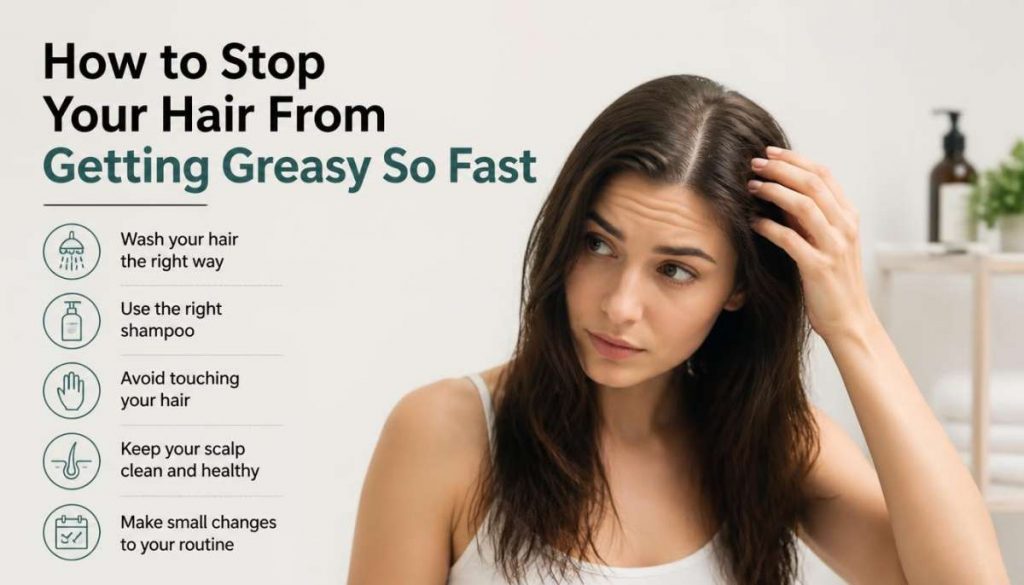
You cannot always change how much oil your scalp naturally produces, but you can manage how quickly it builds up.
1. Find the Right Hair Washing Schedule
There is no universal rule that everyone should wash their hair only two or three times per week.
If you have fine hair or an oily scalp, washing daily or every other day may be reasonable. People with curly, coily, or dry hair may need a less frequent schedule.
Choose a frequency that keeps your scalp comfortable and clean without causing dryness or irritation.
You do not need to force your hair to go several days without washing just to train your scalp. There is no reliable evidence that everyone can permanently reduce oil production by avoiding shampoo.
2. Shampoo Your Scalp, Not Just Your Hair
Shampoo is designed to clean your scalp and remove excess oil, sweat, and residue.
Concentrate on your roots rather than aggressively rubbing the lengths of your hair.
Use your fingertips instead of your nails, and rinse thoroughly. If you have long hair, allow the shampoo to flow through the lengths as you rinse rather than scrubbing them repeatedly.
3. Apply Conditioner Away From Your Roots
Conditioner helps soften and protect the hair, but applying a heavy formula directly to an oily scalp may make your roots look flat.
Apply conditioner mainly to the mid lengths and ends, especially if your hair is long.
If your hair is very short, you may need little or no conditioner depending on its texture and condition.
4. Use Dry Shampoo as a Temporary Solution
Dry shampoo can absorb some excess oil and help your hair look fresher between washes.
It is useful when you need a quick styling solution, but it does not replace washing your scalp.
Use it according to the label and avoid relying on it continuously without regular cleansing.
5. Clean Your Hairbrushes and Styling Tools
Your brushes can collect oil, loose hair, dust, and product residue.
Remove trapped hair regularly and wash your brushes according to their material and manufacturer’s instructions.
Keeping your tools clean helps prevent residue from being transferred back to your hair.
6. Reduce Heavy Hair Products
If your roots become greasy quickly, try simplifying your routine.
Temporarily remove heavy oils, waxes, pomades, and thick leave in conditioners. See whether your hair feels lighter after using fewer products.
Add products back one at a time so you can identify which ones work well for your hair.
How Often Should You Wash Greasy Hair?
Your ideal washing schedule depends on your scalp, hair texture, lifestyle, and the products you use.
| Hair type or situation | Possible washing routine |
|---|---|
| Fine, straight, oily hair | Daily or every other day, if needed |
| Normal hair | Based on oil buildup and comfort |
| Curly or coily hair | Less frequent washing may help prevent dryness |
| Frequent exercise or heavy sweating | Wash as needed after activity |
| Hair with styling product buildup | Shampoo when residue accumulates |
These are general guidelines rather than strict rules. Adjust your routine if your scalp becomes itchy, irritated, or unusually dry.
When Should You See a Dermatologist?

Greasy hair alone is usually not a medical concern. However, you should consider professional advice if you notice:
- Persistent scalp itching
- Redness or swelling
- Thick or recurring greasy flakes
- Pain or irritation
- Sudden changes in scalp oiliness
- Hair loss or unusual shedding
- Symptoms that do not improve with basic hair care
A dermatologist can determine whether the problem is ordinary oil buildup, dandruff, seborrheic dermatitis, or another scalp condition.
Frequently Asked Questions
Why does my hair get greasy one day after washing?
Your scalp naturally produces sebum, and some people produce or distribute it more quickly than others. Fine or straight hair can make oil more noticeable. Your hair type, products, and washing routine may also contribute.
Why does my hair get greasy after a few hours?
Fine hair, naturally oily scalp, heavy styling products, sweat, and touching your hair frequently can all make grease appear quickly. If this happens consistently, try using lightweight products and cleansing your scalp effectively.
Does washing your hair every day make it more greasy?
Not necessarily. Daily shampooing does not automatically cause your scalp to produce more oil. People with fine hair or oily scalps may need frequent washing, while others may benefit from washing less often.
Should I stop washing my hair to train my scalp?
You do not need to stop washing your hair to train your scalp. Oil production is influenced by factors such as genetics and hormones. Skipping washes may simply allow more oil and residue to accumulate.
Is greasy hair a sign of poor hygiene?
No. Greasy hair is usually related to natural oil production, hair texture, and product buildup. It does not automatically mean you have poor hygiene.
Can stress make your hair greasy?
Stress may influence oiliness in some people, but it is not the only possible explanation. Hair texture, hormones, and hair care products can also affect how quickly your hair becomes greasy.
Does conditioner make hair greasy?
Conditioner can make your hair look greasy if it is too heavy for your hair type or applied close to the scalp. Try using a lightweight formula and applying it mainly to the mid lengths and ends.
Final Thoughts
If you keep asking yourself, “Why does my hair get greasy fast?” remember that natural oil production is usually part of the explanation.
Fine or straight hair, hormones, heavy products, sweat, and scalp conditions can all affect how quickly grease becomes noticeable.
Start by shampooing your scalp properly, choosing lightweight products, and adjusting your washing schedule to your hair type. You do not need to follow extreme hair care routines or stop washing your hair to make it healthier.
If greasy hair comes with persistent itching, redness, or unusual flakes, a dermatologist can help identify the cause and recommend suitable treatment.