
How to Air Dry Hair Without Frizz: A Simple Step-by-Step Guide
Air drying can be a great way to give your hair a break from heat styling, but it does not always leave you with the smooth, natural look you expect. Sometimes, hair dries into a puffy, tangled mess with flyaways that seem impossible to control. This is especially frustrating when you have spent time washing and conditioning it.
The secret to learning how to air dry hair without frizz is to prepare it while it is wet, remove excess water gently, and use the right products before letting it dry. Small changes in how you handle your hair after a shower can make a noticeable difference in its final appearance.
Whether your hair is straight, wavy, or curly, you can build a simple routine that helps preserve its natural texture without relying on a blow dryer. Here is how to do it.
Why Does Hair Become Frizzy When It Air Dries?
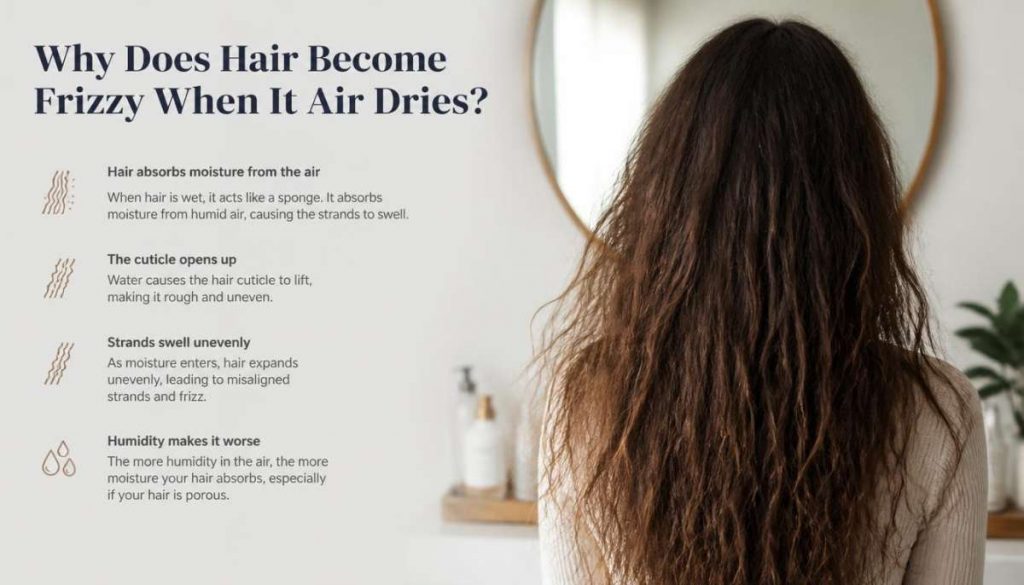
Frizz often develops when the outer surface of the hair becomes rough or raised, allowing individual strands to lose their smooth appearance. Moisture, friction, dryness, and hair damage can all contribute to this problem.
When hair is wet, it is more vulnerable to stretching and physical damage. Rubbing it with a rough towel, brushing it aggressively, or repeatedly running your fingers through it can disturb the natural arrangement of the strands.
Humidity can make the situation worse. Hair absorbs moisture from the surrounding air, which can cause certain textures to swell, expand, or lose their definition.
Other common reasons include:
- Using shampoo that leaves your hair feeling excessively dry.
- Skipping conditioner after washing.
- Applying styling products unevenly.
- Using too much heat on already damaged hair.
- Brushing wavy or curly hair after it has started drying.
- Sleeping or tying your hair up before it is completely dry.
The goal is not to eliminate every natural flyaway. Instead, you want to keep your hair hydrated, reduce unnecessary friction, and allow its natural texture to settle as it dries.
How to Air Dry Hair Without Frizz: Step-by-Step Routine
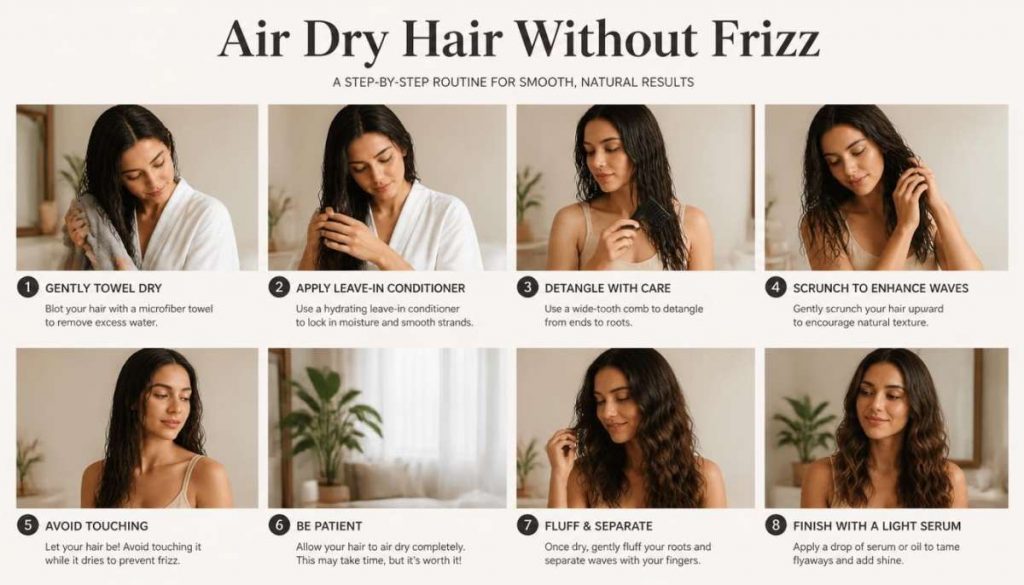
A smooth air-dry result begins before you leave the shower. The following steps help protect your hair while it dries and reduce the chances of unwanted puffiness.
1. Start With a Moisturizing Shampoo and Conditioner
Your air-drying routine begins with the products you use in the shower.
Choose a shampoo that cleans your scalp without leaving your hair feeling stripped or rough. Follow it with a conditioner suited to your hair type.
Conditioner helps smooth the hair surface, improve manageability, and reduce tangles. It also makes wet hair easier to handle when you prepare it for drying.
Pay attention to the lengths and ends, particularly if they tend to feel dry.
A few simple habits can help:
- Use a shampoo appropriate for your scalp.
- Apply conditioner mainly to the middle lengths and ends.
- Leave it on for the time recommended on the packaging.
- Rinse thoroughly without aggressively rubbing your hair.
- Avoid using excessively hot water.
You do not need an expensive collection of products. A suitable shampoo and conditioner are enough to create a good starting point.
2. Detangle Your Hair While It Is Wet
Tangles can turn into a bigger problem when hair starts drying. Pulling a brush through dry, tangled strands can disturb their natural texture and create additional frizz.
The easiest time to detangle most hair types is while conditioner is still in your hair.
Use a wide-tooth comb or a suitable detangling brush. Start near the ends and gradually work toward the roots rather than pulling from the top.
If you have curly or tightly textured hair, detangling with conditioner can help preserve your curl pattern and reduce unnecessary breakage.
Once your hair is detangled, avoid repeatedly brushing it while it dries. Straight hair may tolerate gentle dry brushing better than curls, but excessive handling can still create unwanted volume and flyaways.
3. Replace Your Regular Towel With a Softer Alternative
One common reason air-dried hair becomes frizzy is rough towel drying.
Traditional bath towels can create friction when rubbed against wet strands. This can disturb the hair’s surface and encourage tangles.
Instead of rubbing your hair, use a microfiber hair towel or a clean, soft cotton T-shirt.
Follow this simple method:
- Gently squeeze excess water from your hair.
- Place the towel or T-shirt around your hair.
- Press lightly to absorb moisture.
- Work through different sections without twisting tightly.
- Remove the towel once most excess water has been absorbed.
If you have curly or wavy hair, you can gently scrunch sections upward using the fabric. This helps encourage your natural texture without excessive friction.
Avoid leaving your hair wrapped for too long if the towel is not absorbing moisture effectively.
4. Apply a Leave-In Conditioner While Your Hair Is Damp
A leave-in conditioner can help keep hair manageable between washing and drying.
Unlike a regular conditioner that is rinsed out, a leave-in formula remains on the strands. It can provide additional conditioning, reduce tangles, and make hair feel softer.
Apply a small amount to damp hair, concentrating on the middle lengths and ends.
The amount you need depends on your hair:
- Fine hair: Start with a lightweight formula and use very little.
- Thick hair: You may need a slightly larger amount.
- Wavy hair: Choose a product that provides moisture without flattening your waves.
- Curly hair: A curl-friendly leave-in can help maintain definition and reduce dryness.
Avoid applying too much product at once. Excessive layers can make hair greasy, heavy, or sticky instead of smooth.
5. Use a Styling Product That Matches Your Hair Texture
A leave-in conditioner is not the only option. Depending on your desired result, a styling cream, lightweight serum, or gel may help control frizz.
The right choice depends on what you want your finished hairstyle to look like.
For example, a lightweight styling cream can help smooth loose strands, while a gel can provide hold and help curly hair maintain its shape.
Apply the product evenly while your hair is still damp.
For curly and wavy hair, use your hands to distribute the product and gently scrunch upward. For straight hair, smooth the product over the lengths without repeatedly touching the roots.
Start with a small amount. You can always add more if your hair needs it.
6. Set Your Hair in the Shape You Want
One of the easiest ways to improve your air-drying results is to arrange your hair before it starts drying.
Once the hair begins to lose moisture, changing its position repeatedly can disturb its natural shape.
If you want smooth, straight-looking hair, gently comb it into place while damp.
If you prefer natural waves or curls, scrunch the sections upward to encourage definition.
You can also try loosely arranging your hair around your natural parting.
The important thing is to avoid aggressive brushing, twisting, or pulling once your hair has started to dry.
7. Keep Your Hands Away While Your Hair Dries
This step sounds simple, but it can make a significant difference.
Touching your hair repeatedly while it dries can separate natural curl groups, create friction, and encourage flyaways.
After applying your products and arranging your hair, give it time to dry naturally.
Try to avoid:
- Running your fingers through your hair.
- Repeatedly brushing damp strands.
- Scrunching the same sections over and over.
- Pulling your hair into tight styles.
- Constantly moving your parting.
If your hair is curly, letting the natural curl groups stay together can help maintain definition.
Once your hair is fully dry, you can gently arrange it or loosen any styling cast created by your gel.
8. Finish With a Small Amount of Hair Serum if Needed
Some hair types benefit from a finishing product after drying.
A lightweight hair serum or a few drops of suitable hair oil can help smooth the ends and improve shine.
Use a very small amount and distribute it between your palms before gently applying it to the lengths.
Avoid applying too much near the roots, especially if your scalp becomes oily quickly.
This final step is optional. If your hair already feels soft and smooth, you do not need to add another product.
How to Air Dry Different Hair Types Without Frizz
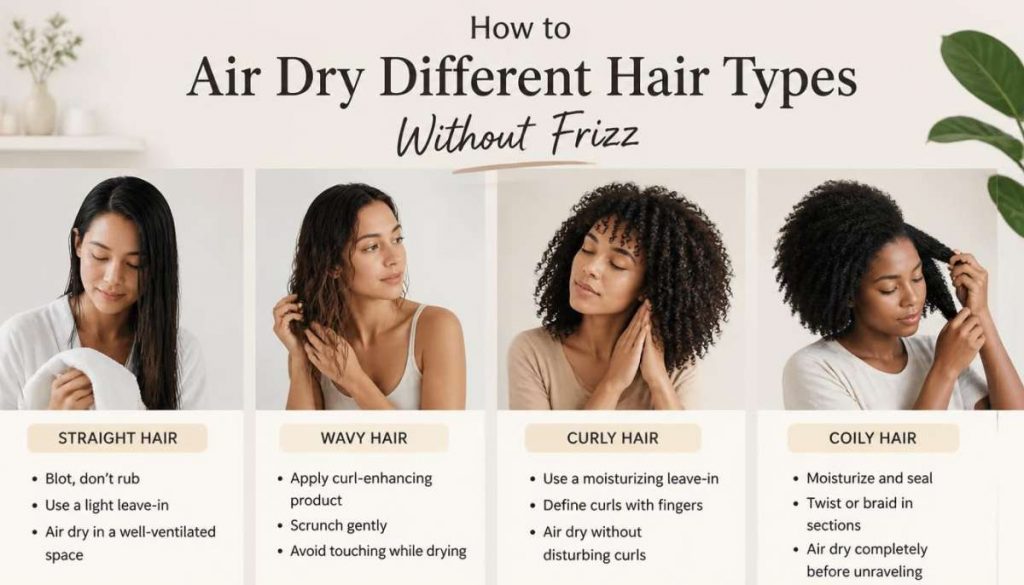
Not every hair type responds to air drying in the same way. Straight hair may need help controlling flyaways, while curly hair often needs more attention to moisture and curl definition.
Here is how to adjust your routine.
Straight Hair
Focus: Smoothness, lightweight moisture, and fewer flyaways.
Straight hair can become flat at the roots or look stringy when too much product is applied.
Use a lightweight conditioner and a small amount of leave-in treatment. After removing excess water, gently comb your hair into the shape you want.
Let it dry without repeatedly brushing or touching it.
If your ends tend to look dry, a small amount of serum can help smooth their appearance once the hair is dry.
Wavy Hair
Focus: Natural wave definition and reduced puffiness.
Wavy hair can lose its shape when brushed repeatedly during drying.
After washing, detangle it with conditioner and gently squeeze out excess water.
Apply a lightweight leave-in conditioner or wave-enhancing styling product. Scrunch your hair upward to encourage the natural wave pattern.
Let it dry without disturbing the sections.
Once completely dry, gently separate the waves if needed.
Curly Hair
Focus: Moisture, curl definition, and gentle handling.
Curly hair often needs more conditioning because its natural shape can make it harder for scalp oils to travel along the strands.
Use a moisturizing conditioner and detangle while the hair is wet.
Apply a leave-in conditioner followed by a suitable curl cream or gel if needed. Scrunch the curls gently and allow them to dry in their natural shape.
Avoid brushing or separating the curls while they are drying.
If your styling product creates a firm cast, gently scrunch it out once your hair is completely dry.
Thick Hair
Focus: Even product distribution and proper drying time.
Thick hair may hold more water and take longer to dry.
Divide it into manageable sections when applying conditioner or styling products. Make sure you do not concentrate all the product on the outer layer.
Use a suitable amount of leave-in conditioner and allow enough time for the hair to dry fully.
Avoid tying it tightly while the inner sections are still damp.
Common Air-Drying Mistakes That Make Hair Frizzy
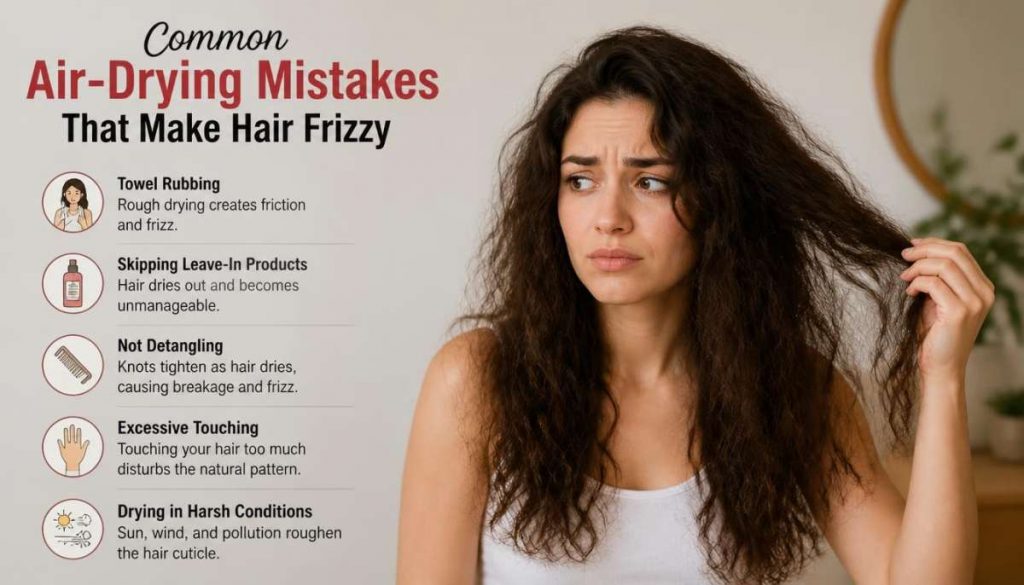
Even when you use good products, a few everyday habits can affect the final result.
Rubbing Hair With a Bath Towel
Rubbing creates unnecessary friction and can increase tangling. Gently squeezing and blotting is a better approach.
Applying Too Much Product
Using several heavy products together can leave hair greasy or weighed down. Start with a simple routine and add products only when needed.
Brushing Hair After It Starts Drying
Brushing can disrupt natural waves and curls, making them appear larger and less defined. Detangle before drying whenever possible.
Leaving Conditioner or Styling Products Unevenly Distributed
If some sections receive too much product while others receive very little, your hair may dry with an uneven texture.
Distribute products carefully and work in sections when necessary.
Tying Hair Up While It Is Still Wet
Wet hair is more vulnerable to stretching and breakage. Tight ponytails, buns, and hair ties can also create unwanted bends.
Allow your hair to dry before putting it into a tight hairstyle.
Ignoring Humidity
Humid weather can make hair swell and become frizzy, especially if it is naturally wavy or curly.
During humid days, a suitable anti-frizz styling product or lightweight gel may help keep your hairstyle more manageable.
How Long Does Hair Take to Air Dry?
Air-drying time varies depending on hair length, thickness, texture, porosity, and the surrounding environment.
Fine, short hair may dry relatively quickly, while thick, long, or tightly curled hair can take several hours.
Humidity and room temperature also make a difference.
You do not need to rush the process. Allowing your hair to dry completely is generally better than tying it up or sleeping with it soaking wet.
If you regularly find that your hair takes an unusually long time to dry, consider whether you are using too much heavy product or whether your hair is particularly dense.
Frequently Asked Questions
How can I air dry my hair without it getting frizzy?
Use a moisturizing conditioner, gently remove excess water with a microfiber towel or cotton T-shirt, and apply a suitable leave-in product while your hair is damp. Avoid rubbing, brushing, or repeatedly touching your hair while it dries.
Is it better to air dry hair naturally or use a hair dryer?
Both methods have advantages and disadvantages. Air drying avoids direct heat exposure, while careful blow-drying with a heat protectant and moderate temperature can reduce the time hair stays wet. The best option depends on your hair type and routine.
Should I brush my hair before or after air drying?
For most hair types, detangling while the hair is wet and conditioned is a good starting point. Straight hair can be gently brushed after drying if needed, while curly hair generally benefits from avoiding dry brushing.
Does a microfiber towel help prevent frizz?
Yes, a microfiber towel can help reduce friction compared with rough towel rubbing. Gently squeezing or blotting the hair rather than scrubbing it can also help reduce tangles.
What should I put in my hair before air drying?
Depending on your hair type, you can use a leave-in conditioner, lightweight styling cream, serum, or gel. Start with a small amount and apply it evenly to damp hair.
Why does my hair look puffy after air drying?
Puffiness can result from dryness, humidity, friction, or disturbing your natural hair texture while it dries. Better conditioning, gentler towel drying, and suitable styling products may help.
Can I air dry curly hair without using gel?
Yes. Gel is optional. A leave-in conditioner or curl cream may provide enough moisture and definition for some hair types. However, gel can offer additional hold if your curls lose their shape easily.
Is sleeping with wet hair bad?
Sleeping with very wet hair can increase tangling and friction against your pillow. It is generally better to let your hair dry as much as possible before going to bed.
Enjoy Softer, More Manageable Hair Without Heat
Learning how to air dry hair without frizz does not require a complicated collection of styling products. The biggest difference often comes from how you handle your hair after washing.
Start with a suitable conditioner, detangle gently, remove excess water without rubbing, and apply products that match your hair texture. Once your hair is arranged, leave it alone until it dries.
With a little consistency, you can make air drying a more comfortable part of your routine while keeping your natural texture looking smooth, defined, and healthy.