French Crop Haircut for Receding Hairline: 7 Styles to Try
A receding hairline can change how you feel about your hairstyle, especially when the hair around your temples starts looking thinner. But that doesn’t mean you have to give up on modern, stylish haircuts. The right cut can make your hair look more balanced without requiring complicated styling.
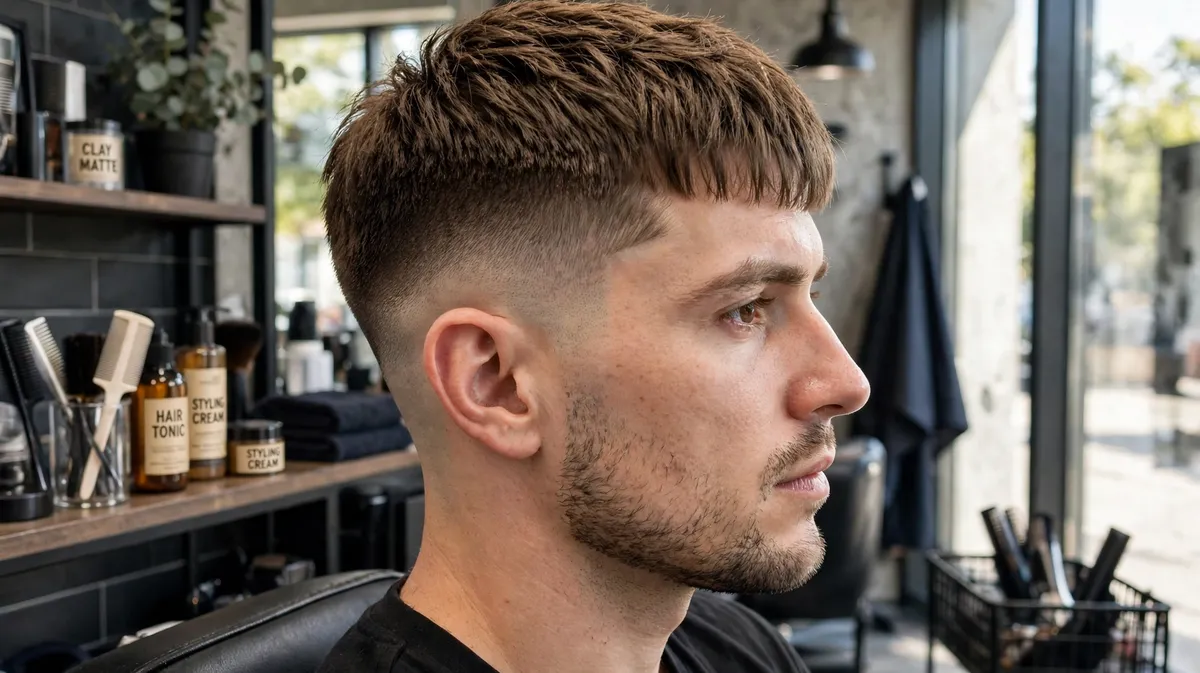
A French crop haircut for a receding hairline is worth considering because its short sides and forward-textured fringe can help soften the appearance of a changing hairline. It also works with several hair textures and can be adjusted to suit different preferences.
The important thing is choosing the right version. A very short fringe, a heavy textured top, and a low fade can create quite different results. Here’s how to find a French crop that works with your hair rather than fighting against it.
Is a French Crop Good for a Receding Hairline?
Yes, a French crop can be a good option for some men with a receding hairline. Its defining feature is a short fringe that sits toward the front of the forehead. This can help soften the appearance of receding temples, particularly when the recession is mild or moderate.
The haircut also creates a neat contrast between the top and sides. Keeping the sides shorter can make the top look more intentional, while a textured finish adds visual movement.
However, a French crop doesn’t hide every type of hair loss. If the hairline has receded significantly or the hair is very thin across the top, a heavy fringe may not look natural. In those situations, a shorter and more evenly balanced crop may be a better choice.
7 French Crop Haircut Styles for a Receding Hairline
Not every French crop looks the same. The length of the fringe, amount of texture, and type of fade can change the overall appearance. These seven options are worth discussing with your barber.
1. Textured French Crop
A textured French crop keeps the top slightly longer and adds layers or choppy finishes throughout the hair. Instead of lying flat, the hair has a relaxed, uneven appearance.
This style can work well when you want to draw attention to the texture rather than the hairline. A soft, forward fringe can also reduce the visual emphasis on the temples.
Ask your barber for:
- Short or medium-length textured hair on top
- A natural, slightly uneven fringe
- Neat sides without an overly harsh contrast
- A matte finish rather than a shiny, slick look
It’s a useful choice for men who have enough hair density on top to create visible texture.
2. French Crop with Low Fade

A low fade starts near the lower part of the sides and gradually blends the hair shorter toward the neckline. Because the fade doesn’t rise too high, it keeps more hair around the upper sides of the head.
For someone with a receding hairline, this can create a balanced look without making the sides appear excessively exposed.
The top can be kept textured, with a short fringe directed slightly forward. If you prefer a subtle haircut rather than a dramatic one, a low fade is worth considering.
Best for: Men who want a clean, modern French crop with a softer transition on the sides.
3. French Crop with Mid Fade
A mid fade begins higher than a low fade and creates a more noticeable contrast between the sides and top. It gives the French crop a sharper, more contemporary appearance.
The key is not to make the sides excessively short if that would draw unwanted attention to the hairline. Ask your barber to keep the fade balanced with the length and density of your top hair.
A textured fringe can help complete the look without making the front appear too heavy.
Best for: Men who prefer a more defined haircut and have enough density on top to balance the shorter sides.
4. Short French Crop
A short French crop keeps the hair relatively close to the head, including the fringe. It is a practical option if you don’t want to spend much time styling your hair every morning.
Because the top is shorter, there is less opportunity to create a heavy fringe. That can be useful if longer front hair separates easily or looks too thin.
Ask for a natural hairline finish instead of an artificially straight front edge. A barber can adjust the fringe length to suit your actual hairline.
Best for: Men who prefer low-maintenance haircuts and a neat, understated appearance.
5. Messy French Crop

A messy French crop uses loose texture and slightly irregular styling to give the top a relaxed finish. It doesn’t need to look perfectly arranged.
This option can be useful when your hair naturally has some movement or wave. A little texture can make the haircut look fuller than a flat, carefully combed style.
Use a small amount of matte styling product and work it through the top with your fingers. Avoid applying too much product, as heavy products can make fine hair look separated or greasy.
Best for: Men who prefer casual styling and don’t want their haircut to look overly polished.
6. Soft Fringe French Crop
A soft fringe French crop uses a gentle, natural-looking front rather than a thick, blunt line. The fringe can sit slightly forward and follow the shape of the forehead.
This detail matters when the temples are receding. A very straight or sharply defined fringe can make the contrast between the front hair and temples more noticeable. A softer finish may look more natural.
Ask your barber to customize the fringe instead of cutting it to one rigid length across the forehead.
Best for: Men with mild temple recession who prefer a natural-looking front.
7. French Crop for Thinning Hair
Thinning hair needs a slightly different approach from a receding hairline. A receding hairline usually affects the front and temples, while thinning may also reduce density across the top or crown.
If the top is becoming thinner, a shorter French crop can be easier to manage than a longer style that separates into visible sections. Keeping the length relatively consistent can also help avoid exaggerated differences in density.
A barber should assess how much coverage is available before deciding on the fringe length. Don’t assume that a longer fringe will automatically create a fuller appearance.
Best for: Men with mild overall thinning who prefer a simple, controlled haircut.
How to Choose the Right French Crop for Your Hairline
Before choosing a particular style, consider where your hair is receding and how much density remains on top.
| Your hair situation | French crop option to consider |
|---|---|
| Mild temple recession | Soft fringe French crop |
| Receding temples with good top density | Textured French crop |
| Preference for a neat finish | Low fade French crop |
| Stronger contrast and modern styling | Mid fade French crop |
| Fine or thinning top hair | Short French crop |
| Naturally wavy hair | Messy textured French crop |
| Very advanced recession | Short, balanced crop or another style based on remaining density |
These are starting points, not fixed rules. Your face shape, hair direction, density, and personal preference all affect the final result.
French Crop vs Caesar Cut for a Receding Hairline
The French crop and Caesar cut have similarities because both usually feature short hair and a forward-facing fringe. However, they are not exactly the same.
| Feature | French Crop | Caesar Cut |
|---|---|---|
| Top length | Can be short or moderately textured | Usually kept short |
| Fringe | Often textured and customizable | Usually short and more uniform |
| Overall appearance | Modern and versatile | Classic and simple |
| Styling | Can use texture or a messy finish | Usually needs minimal styling |
| Fade options | Works with low, mid, or high fades | Can also be paired with fades |
A French crop may offer more flexibility if you want movement and texture on top. A Caesar cut can be a simpler alternative if you prefer a shorter, more consistent finish.
Neither haircut automatically conceals a receding hairline. The better choice depends on your hair density and the appearance you want.
What to Tell Your Barber
Knowing the haircut’s name isn’t always enough. Two barbers can interpret a French crop differently, so explain the result you want before they start cutting.
You can use these instructions:
- “I’d like a French crop with a natural forward fringe.”
- “Please keep the top textured rather than completely flat.”
- “I want a low fade, but not too much contrast on the sides.”
- “Keep the fringe soft and avoid making the front look too heavy.”
- “Please work with my natural hairline rather than creating a very straight artificial edge.”
If possible, take two or three reference photos showing the top, front, and sides. A photo of the exact fringe you like can be more helpful than showing your barber only the name of the haircut.
Also, let your barber know if your temples are receding or if the hair on top is becoming thinner. This helps them choose a realistic length rather than promising coverage that the haircut cannot provide.
How to Style a French Crop for a Receding Hairline
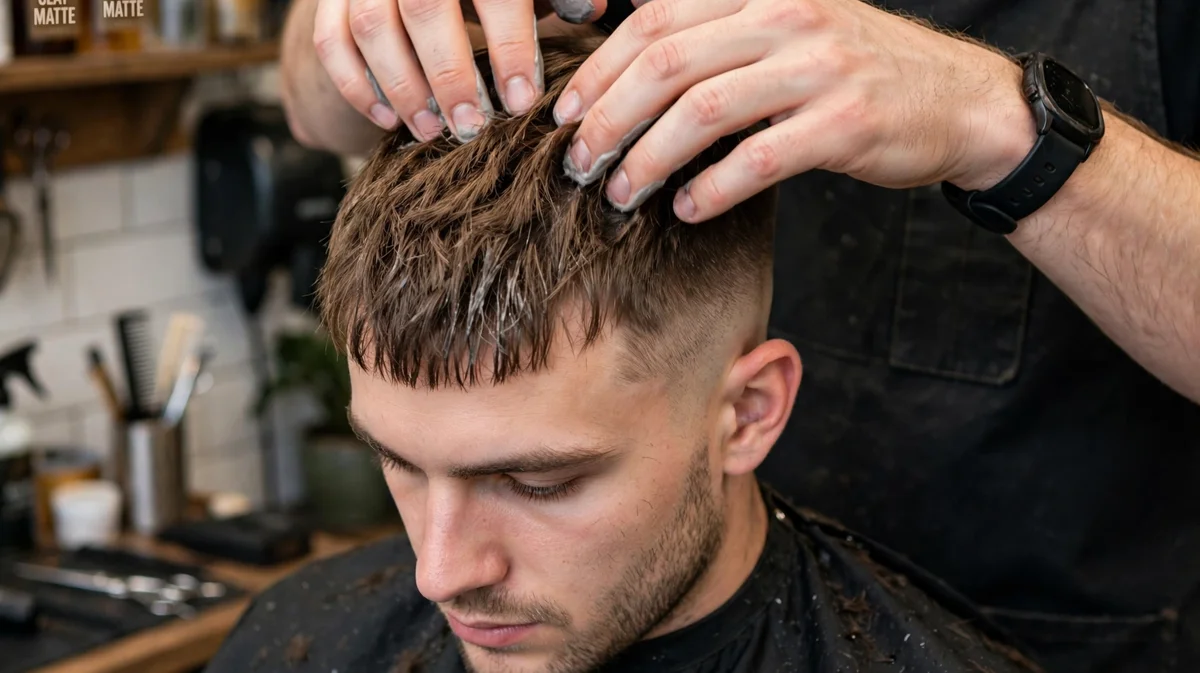
A French crop is generally easy to maintain, but the right styling technique can make a noticeable difference.
Start with clean, slightly damp hair
Wash your hair as needed and towel-dry it gently. You want it slightly damp, not soaking wet, before applying styling product.
Choose a lightweight product
A matte clay, lightweight paste, or suitable texturizing product can add definition without creating too much shine.
If your hair is fine, start with a very small amount. Heavy products can weigh the hair down and make individual strands stick together.
Work the hair forward
Use your fingers to direct the front section gently toward the forehead. Avoid forcing every strand into a perfectly straight line.
A little natural separation can make the style look more relaxed.
Add texture without overdoing it
Use your fingertips to create small sections on top. Don’t repeatedly brush the hair into a flat shape if your goal is a textured finish.
Keep the sides maintained
A fade or short sides will need regular barber visits to keep the shape looking clean. The exact schedule depends on how quickly your hair grows and how sharp you want the fade to remain.
Common French Crop Mistakes to Avoid
A French crop can look great, but a few mistakes may make the result less flattering.
1. Choosing a fringe that’s too heavy
Longer front hair doesn’t always provide better coverage. If the hair is fine or sparse, a heavy fringe may separate and expose more scalp.
2. Getting a fade that’s too high
A high fade creates stronger contrast. That may not suit everyone, especially if you want a softer and more balanced appearance.
3. Making the fringe too straight
A very sharp, blunt fringe can look unnatural on some hairlines. Ask your barber whether a slightly textured front would suit you better.
4. Using too much styling product
Excessive clay or wax can weigh down fine hair. Start with a small amount and add more only if needed.
5. Choosing a style without considering hair density
A haircut that looks great on someone with thick hair may not produce the same result on thinning hair. Choose a version based on your own hair, not just a reference photograph.
When a French Crop May Not Be the Best Choice
Although a French crop suits many men, it isn’t the ideal solution for every hairline.
If your recession is advanced, there may not be enough front hair to create the fringe you want. Similarly, if the top is significantly thinner than the sides, a longer textured crop might make the difference in density more obvious.
In these cases, a shorter and more uniform cut may look more balanced. You could also discuss a buzz cut, Caesar cut, or another low-maintenance style with your barber.
If your hair loss is sudden, patchy, rapidly progressing, or concerning, consider speaking with a dermatologist rather than relying on a haircut to address it.
Frequently Asked Questions
Is a French crop good for a receding hairline?
A French crop can be a good option for mild or moderate recession, particularly around the temples. Its forward fringe can soften the appearance of the front hairline, but results depend on hair density and the extent of recession.
Does a French crop hide receding temples?
A textured or soft fringe may make receding temples less noticeable. However, it doesn’t restore lost hair or completely conceal advanced recession.
Is a French crop good for thin hair?
It can work with mild thinning when the top is kept at a suitable length. A shorter, controlled crop may look more balanced than a long fringe that separates into thin sections.
Should I get a low fade or mid fade with a French crop?
A low fade creates a more subtle transition and keeps more length around the upper sides. A mid fade gives a sharper contrast. Choose based on your preferred appearance and the density of your hair.
How long should the fringe be for a receding hairline?
There is no single ideal length. The fringe should be long enough to sit naturally forward without looking heavy or separating into sparse sections. Your barber can adjust it to your hair density and natural growth direction.
Can I get a French crop if my hairline is very receded?
You may still be able to wear a short crop, but a traditional French crop with a full fringe may not be practical. A barber can recommend a more balanced alternative based on the hair that remains.
Is a French crop high maintenance?
Generally, no. The top can be styled in a few minutes with a small amount of product. Faded sides may need more frequent trimming if you want to maintain a sharp appearance.
Final Thoughts
A French crop haircut can be a smart style choice for men dealing with a receding hairline, especially when the recession is around the temples and there is still good density on top.
The best version isn’t necessarily the one with the longest fringe or the shortest fade. It’s the one that works with your natural hairline, hair texture, and preferred level of maintenance.
Before your next haircut, show your barber a few reference photos and explain how your hairline has changed. A little customization can make the difference between a haircut that simply looks trendy and one that genuinely suits you.