
Why Does My Hair Feel Waxy After Washing? 7 Causes and Practical Fixes
You finish washing your hair, rinse it carefully, and expect it to feel fresh. But when you run your fingers through it, something feels wrong. Your roots seem coated, the lengths feel slippery or sticky, and your hair looks flatter than it did before washing.
If this sounds familiar, you may be asking: why does my hair feel waxy after washing?
The strange feeling does not automatically mean your shampoo is bad or your hair is dirty. Sometimes conditioner remains on the strands. In other cases, styling products, hard-water minerals, or an unsuitable washing routine may be responsible.
The useful thing is to notice where the waxy feeling appears, when it starts, and whether it happens with every wash. Those small clues can help you find a better solution without repeatedly changing products.
What Does Waxy Hair After Washing Actually Feel Like?
Waxy hair can feel different from ordinary greasy hair. Some people describe it as having a thin coating over each strand. Others notice that their hair sticks together, feels unusually heavy, or becomes difficult to style.
You might notice:
- Roots that feel oily or coated shortly after washing
- Hair that looks dull instead of clean and light
- Strands that feel slippery, sticky, stiff, or slightly tacky
- Hair that separates into small sections rather than falling naturally
- Conditioner-like residue that seems difficult to rinse away
- Less volume, especially around the crown
One important detail: waxiness is a description of how hair feels, not a diagnosis. Product residue, excess oil, and mineral deposits can create similar sensations, so the timing and location matter.
7 Reasons Your Hair Feels Waxy After Washing
1. Too Much Conditioner Is Staying on Your Hair
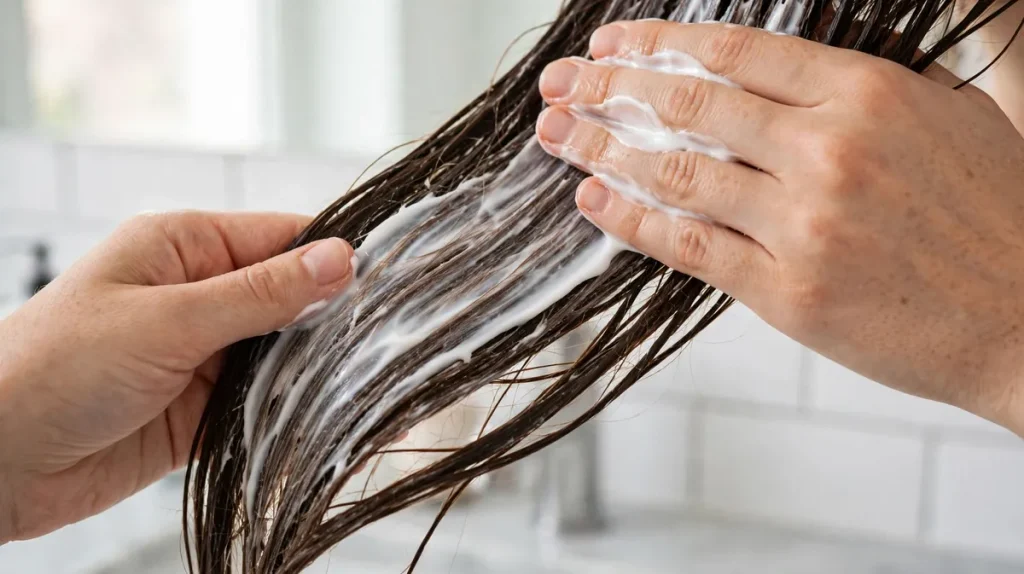
Conditioner is designed to make hair easier to manage. Its conditioning ingredients coat the hair surface and reduce friction, which is useful for dry, damaged, or tangled strands.
However, using more conditioner than your hair needs can leave it feeling heavy. This is particularly noticeable when a rich formula is used on fine hair or applied close to the roots.
What you can do:
- Start with a smaller amount of conditioner.
- Apply it mainly to the middle lengths and ends.
- Keep it away from the scalp unless the product instructions specifically say otherwise.
- Rinse thoroughly, especially around the back of your head and underneath longer hair.
You do not need to stop using conditioner altogether. The goal is to use an amount and formula that suit your hair.
2. Styling Products Have Built Up Over Time
Hair oils, leave-in conditioners, styling creams, gels, waxes, hairsprays, and dry shampoos can leave ingredients behind on the hair.
Using several products together may make buildup more noticeable. For example, someone might apply leave-in conditioner after washing, add styling cream before blow-drying, and use dry shampoo the next morning. Each product may work individually, but the combined routine can become too heavy.
What you can do:
- Take a look at everything you apply between washes. Temporarily simplify your routine and see whether the waxy feeling improves.
- If residue continues to build up, a clarifying shampoo may help remove product deposits. Follow the product directions and avoid using a stronger cleanser more often than your hair needs.
3. Your Water May Contain a High Level of Minerals
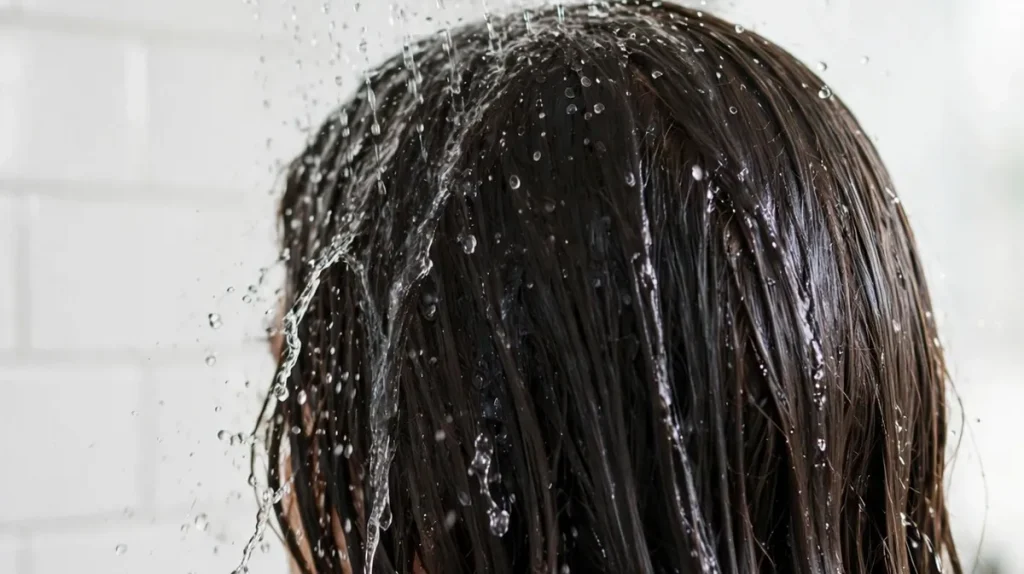
Hard water contains higher concentrations of dissolved minerals, particularly calcium and magnesium.
These minerals can interact with cleansing products and contribute to deposits on hair. The result may be a dull, rough, coated, or difficult-to-manage feeling.
Hard water is worth considering when:
- Your hair feels different after washing in another location.
- The problem began after moving to a new home.
- Your usual shampoo seems to rinse differently.
- You notice mineral deposits on taps, shower screens, or other bathroom surfaces.
What you can do:
If you suspect hard water, consider a shampoo specifically designed to remove mineral deposits. These products are often described as chelating shampoos.
A shower filter may help with some water-related issues, but do not assume every filter removes the minerals responsible for hard water. Check what the product is actually designed to reduce.
4. Shampoo or Conditioner Is Not Being Rinsed Out Completely
A quick rinse can leave product behind, particularly if you have thick hair, long hair, or a dense hairstyle.
This can happen around the nape of the neck, behind the ears, underneath the top layers, and close to the roots. You may rinse the front of your hair thoroughly while missing other areas.
What you can do:
Divide your hair into a few sections while rinsing. Move your fingers gently through the roots and lengths so water can reach areas that are usually missed.
Pay attention to the back of your head. It is easy to overlook this area when washing your hair yourself.
You do not need to scrub aggressively. A careful rinse is more useful than rough handling.
5. Your Shampoo Is Too Mild for Your Current Routine
A gentle shampoo can be a good everyday choice, but it may not remove all the residue left by heavy styling products or frequent use of oils and creams.
This does not mean gentle shampoos are ineffective. It means the cleansing strength may not match what your hair currently needs.
For example, someone who uses only a little conditioner may have very different cleansing needs from someone who regularly uses styling wax, dry shampoo, and leave-in treatments.
What you can do:
Consider how many products you use and how often you wash your hair. If your hair consistently feels coated, you could try a suitable clarifying shampoo occasionally, following its instructions.
Avoid switching immediately to the strongest shampoo available. Excessive cleansing can leave hair dry or rough.
6. Your Hair Wash Routine Does Not Match Your Scalp
Your scalp produces natural oil called sebum. Some people notice oily roots within a day, while others can go longer between washes without their hair looking greasy.
If your scalp becomes oily quickly but you use a very mild cleansing routine, your roots may still feel coated after washing.
On the other hand, washing too aggressively can leave the scalp uncomfortable and the lengths dry.
What you can do:
Focus shampoo on the scalp rather than rubbing it vigorously through every length of hair. Massage gently with your fingertips, then allow the rinse water to clean the remaining strands.
Choose your washing frequency according to how quickly your scalp becomes oily, your activity level, and the products you use. There is no single washing schedule that suits everyone.
Read our guide on why hair gets greasy fast and how to fix it.
7. A Product May Not Agree With Your Scalp or Hair
Sometimes the problem begins after introducing a new shampoo, conditioner, hair mask, or styling product.
A formula that works well for one person may feel too heavy for someone else. In addition to a coated feeling, an unsuitable product may cause itching, redness, burning, or irritation.
What you can do:
Stop using a newly introduced product if it appears to trigger irritation. Return to a simpler routine and observe whether the symptoms settle.
If irritation is persistent, painful, or accompanied by a rash, seek advice from a dermatologist rather than trying several stronger cleansing products.
How to Identify the Cause: A Simple Hair Feel Check
Instead of replacing your entire hair-care collection, look at the pattern of the problem first.
| What you notice | Possible explanation | What to check first |
|---|---|---|
| Roots feel waxy immediately after washing | Incomplete cleansing or rinsing | Shampoo coverage and rinsing |
| Lengths feel coated but roots feel clean | Heavy conditioner or styling products | Conditioner amount and placement |
| Hair becomes dull and rough over time | Possible mineral or product buildup | Water conditions and product use |
| Hair feels heavy after using a hair mask | Formula may be too rich | Amount and frequency |
| Waxy feeling started after a new product | Product may not suit your hair | Stop and review the new product |
| Hair feels itchy or irritated as well | Possible scalp irritation or skin condition | Stop suspected trigger and seek advice if persistent |
These are clues, not definite diagnoses. More than one cause can also be present at the same time.
How to Get Rid of Waxy Hair Without Overwashing
Once you have identified a likely cause, make one or two changes rather than changing everything at once.
Read our complete hair care routine guide for healthy hair.
Step 1: Simplify Your Hair Products
For your next few washes, use fewer styling products. Avoid layering several heavy creams, oils, and leave-in treatments until you understand what your hair needs.
This makes it easier to identify whether product buildup is contributing to the problem.
Step 2: Shampoo Your Scalp Properly
Wet your hair completely before applying shampoo. Use an appropriate amount and massage it gently into the scalp with your fingertips.
Pay attention to the crown, sides, and back of your head. Avoid scratching with your nails.
Read our guide on why hair smells bad after washing.
Step 3: Rinse More Thoroughly
Give your hair enough time under running water. Separate thicker sections with your fingers so the water reaches the scalp and the hair underneath.
If your hair is long or thick, a careful rinse may take longer than you expect.
Step 4: Adjust Your Conditioner
Apply conditioner where your hair needs it most. For many people, that means the middle lengths and ends rather than the roots.
If your hair is fine, start with a small amount. If it is thick, curly, or dry, you may need more conditioning, but the right amount depends on the formula and your hair.
Step 5: Consider a Clarifying or Chelating Shampoo

These products are not exactly the same.
A clarifying shampoo is generally intended to remove accumulated styling products, oils, and residue. A chelating shampoo is designed to help remove mineral deposits associated with hard water.
Choose according to the likely cause and the product label. Use it as directed, and follow with conditioner if your hair needs it.
You do not need to use a clarifying shampoo every wash. Frequent use of a strong cleanser may leave some hair types feeling dry or rough.
Step 6: Give Your Hair Time to Show a Pattern
After changing your routine, pay attention to how your hair feels after each wash.
If the waxy feeling disappears after reducing conditioner, you may have found the issue. If it returns mainly after using styling products, product buildup may be more relevant.
Changing one thing at a time makes the result easier to understand.
Does Waxy Hair Mean Your Hair Is Dirty?
Not necessarily.
Hair can feel waxy even when you have washed it properly. Conditioner ingredients, styling products, and minerals in water can all affect the way hair feels.
It is also possible for the scalp to produce oil soon after washing. This does not automatically mean you have done something wrong.
Rather than washing repeatedly, look at whether the problem is concentrated at the roots or along the lengths. That distinction can help you choose a more appropriate adjustment.
Can Hard Water Make Hair Feel Waxy?
Yes, hard water can contribute to a coated or dull feeling.
Calcium and magnesium are the main minerals associated with water hardness. Depending on the water and the products you use, mineral deposits can affect how your hair feels after washing.
If the problem is noticeably worse in one location than another, water quality may be worth investigating.
However, hard water is not automatically the cause of every waxy-hair problem. Product residue and incomplete rinsing can create similar symptoms.
When Should You Be Concerned?
A waxy feeling by itself is usually a hair-care concern rather than proof of a medical problem.
However, pay attention if you also experience:
- Persistent scalp itching
- Redness, burning, or swelling
- Painful or inflamed areas
- Unusual scaling or sores
- Symptoms that continue despite stopping a suspected product
These signs may need professional assessment. A dermatologist can help distinguish ordinary product residue from irritation or an underlying scalp condition.
Frequently Asked Questions
Why does my hair feel waxy even after shampooing twice?
Shampooing twice does not guarantee that every type of residue will disappear. Heavy conditioner, styling products, hard-water minerals, or incomplete rinsing may still contribute to the feeling. Check your product routine and water conditions before adding more washes.
Why do my roots feel waxy but my ends feel dry?
Your scalp produces natural oil, while the ends of your hair are older and may be more prone to dryness. Product buildup near the roots can make them feel coated, while the ends may still need conditioning.
Try focusing shampoo on the scalp and conditioner on the lengths.
Can conditioner make hair feel greasy or waxy?
Yes. Too much conditioner or a formula that is too rich for your hair can leave it feeling heavy or coated. Reduce the amount and apply it mainly to the lengths and ends.
Should I use clarifying shampoo every time I wash my hair?
No. Clarifying shampoos are generally used when buildup needs to be removed, not necessarily as everyday cleansers. Follow the product instructions and consider your hair’s condition before using one.
Does hard water make shampoo less effective?
Hard water minerals can interfere with how some cleansing products behave and may contribute to deposits on hair. The effect depends on the water, shampoo formula, and your hair-care routine.
Why does my hair feel waxy after using a shampoo bar?
Some shampoo bars are soap-based, while others use synthetic cleansing agents called surfactants. Soap-based bars can react with minerals in hard water and leave deposits that contribute to a coated or rough feeling.
Check the product type and how it performs with your local water before assuming your hair needs an adjustment period.
Final Thoughts
When your hair feels waxy after washing, using more shampoo is not always the answer. The feeling may come from conditioner that is too heavy, styling-product residue, hard-water minerals, or a rinse that was not thorough enough.
Start by noticing where the coating appears and whether the problem began after changing a product or routine. Then make a small adjustment and see how your hair responds.
A good hair-care routine should leave your hair manageable without making it feel overloaded. The right balance is more useful than adding another product every time something feels wrong.